What Are the Types of Wastewater Treatment?

Clean water is a vital resource for both humans and the environment, but it doesn’t appear magically. Once water has been used, it becomes wastewater. Treating this wastewater effectively is essential for public health, environmental protection, and industrial sustainability.
But what are the types of wastewater treatment? Below, we’ll break down the types, levels, and processes involved in efficient wastewater treatment and highlight its broader impact.
What Are the Main Types of Wastewater?
Before discussing treatment, it’s important to understand the main types of wastewater. These include:
- Blackwater
Blackwater is wastewater that comes from toilets and contains human excreta. It’s highly contaminated and requires extensive treatment due to its bacterial and viral loads. - Greywater
Greywater mainly refers to water from baths, sinks, and washing machines. While less contaminated than blackwater, it still contains soap, oils, and minor pollutants. - Industrial Wastewater
Industrial wastewater originates from factories and contains chemicals, heavy metals, and toxins. Since this is usually process-specific, treatment needs vary across industries. - Stormwater
Stormwater results from rain or melted snow that runs off surfaces like roads and parking lots, picking up debris, oil, and other pollutants.
Each of these types demands unique treatment approaches, which leads us into exploring what are the main types of wastewater treatment.
What Are the Types of Sewage Treatment?
Wastewater treatment is organized into distinct stages: preliminary, primary, secondary, and tertiary. Each stage employs specific methods to progressively remove contaminants and ensure the treated water is safe for discharge or reuse.
Preliminary Treatment
This initial stage is designed to remove large debris, grit, and solids such as sticks, rags, sand, and grease. Its main goal is to protect downstream equipment and enhance the efficiency of subsequent processes. Common methods include screening, comminution, grit removal, and oil & grease traps.
Primary Treatment
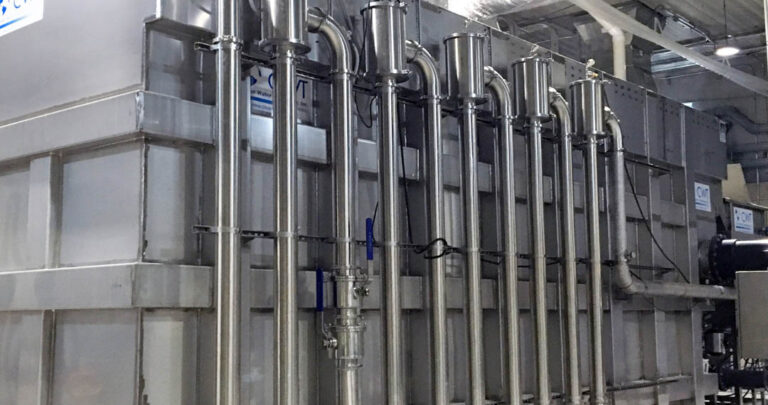
Following preliminary treatment, this stage focuses on removing total suspended solids (TSS), fats, oils, and grease (FOG), as well as portions of biochemical oxygen demand (BOD) and chemical oxygen demand (COD). Modern treatment systems primarily rely on flotation and separation technologies—such as Dissolved Air Flotation (DAF) and GEM Systems—which offer faster and more efficient contaminant removal. While sedimentation is still used in some setups, it is increasingly being phased out or retrofitted with flotation-based solutions to enhance performance and reduce processing time. Additional methods like chemical precipitation, coagulation and flocculation, and solvent extraction may also be applied depending on the wastewater characteristics.
Secondary Treatment
In this stage, biological processes become central. Engineered microbial systems—such as anaerobic digesters, aerobic lagoons, membrane bioreactors (MBRs), and moving bed biofilm reactors (MBBRs)—are used to degrade dissolved organic matter and nutrients like nitrogen and phosphorus, enhancing effluent quality significantly.
Sludge produced during the earlier treatment stages—particularly primary and secondary—requires dedicated handling. Depending on its composition, it is often dewatered to reduce the number of trucks on the road, saving handling costs and infrastructure repairs. Smart sludge management allows for landspreading, beneficial reuse or oil recovery.
Tertiary Treatment
Also known as advanced treatment, this stage further polishes the water to meet specific standards for reuse or discharge. It removes remaining impurities and recalcitrant pollutants, and may also target nutrients not fully eliminated before. Technologies used include membrane filtration, adsorption, chemical and advanced oxidation processes, electrochemical methods, ion exchange, membrane distillation, and further chemical precipitation. Understanding these levels clarifies what are the types of wastewater treatment, demonstrating their importance in a functioning water system.

These steps explain the processes behind what are the types of sewage treatment, ensuring wastewater is thoroughly purified before it’s reused or discharged.
What Are the Levels of Wastewater Treatment?
Wastewater treatment levels mirror the types of treatment, each progressively removing contaminants to meet quality standards. Here’s a closer look at what are the levels of wastewater treatment:
- Preliminary Treatment
Screening large solids and grits is the first task. This prevents damage to equipment and increases treatment efficiency. Think of it as the foundation for the succeeding levels. - Primary Treatment
After the initial screening, water is directed into treatment systems where suspended solids and sludge are removed. This is typically done using settling tanks (clarifiers), where heavier particles sink to the bottom. However, for lighter solids, fats, oils, and grease that do not settle easily, flotation systems—such as Dissolved Air Flotation (DAF)—are used. These systems introduce fine air bubbles that cause contaminants to float to the surface, where they can be skimmed off. Technologies such as the GEM System, a specialized system developed by Clean Water Technology, are essential for industries dealing with difficult-to-remove materials and are a key component of many primary treatment processes.
- Secondary Treatment
Using microorganisms, this stage removes dissolved pollutants. It’s one of the most critical steps for cleaning domestic sewage. - Tertiary Treatment
This is where specialized processes, from UV disinfection to chemical coagulation, come into play. It ensures water is safe for high-grade reuse. Advanced quaternary treatments, though less common, handle hard-to-treat industrial contaminants.
Understanding these levels clarifies what are the types of wastewater treatment, demonstrating their importance in a functioning water system.
What Are the Types of Waste?
Interestingly, wastewater treatment intersects with waste management, especially the four classifications of waste. Here’s how they connect:
- Solid Waste
Physical debris like plastics or metals often finds its way into stormwater systems. Effective removal is vital to prevent further contamination. - Liquid Waste
From industrial runoff to oils, liquid waste is a direct contributor to wastewater streams. - Organic Waste
Biodegradable materials, like food scraps or excreta, are often treated during biological processes in wastewater systems. - Hazardous Waste
Toxic chemicals, heavy metals, or solvents from industrial plants are classified as hazardous and require specialized handling.
Linking waste types to treatment strategies highlights their complementary roles and emphasizes an integrated approach to environmental management.
How Wastewater Treatment Supports Industrial Sustainability
Industries face strict environmental regulations and bear a significant responsibility to minimize their ecological footprint. By treating industrial wastewater, companies improve water quality and reduce harmful discharges into ecosystems. Advanced technologies used in wastewater facilities allow industries to reuse treated water, conserving resources and enhancing productivity.
Examples, such as food processing plants using treated water for irrigation or factories adopting quaternary treatment processes to ensure maximum reuse of water, highlight the clear benefits of advanced wastewater management. These practices not only reduce wastewater but also help industries lower their environmental footprint, demonstrating tangible steps towards sustainability. By prioritizing efficient water recycling and treatment, industries can conserve resources, comply with environmental regulations, and reduce operational costs. Thus, how wastewater treatment supports industrial sustainability ties directly into the future of green industries, paving the way for more eco-friendly and responsible business practices.
Summary of Treatment Types and Their Use Cases
Ultimately, all types and levels of wastewater treatment serve to meet different challenges, each tailored to specific needs and environmental requirements. Preliminary treatment focuses on removing large solids and debris, making it suitable for simpler tasks like stormwater management. Primary treatment focuses on removing suspended solids and some organic material through physical and physico-chemical methods such as sedimentation and flotation. This stage is typically followed by secondary treatment, where biological processes break down dissolved organic matter, making it especially effective for municipal wastewater. Secondary treatment goes beyond the basics, incorporating advanced biological treatments to remove nutrients, pathogens, and other contaminants, essential for meeting stringent standards like those for pharmaceutical discharge. Finally, Tertiary treatment involves cutting-edge technologies like reverse osmosis and advanced oxidation to handle the most difficult pollutants.
Understanding what are the types of wastewater treatment is essential for organizations aiming to design systems that address specific water challenges, ensure compliance with regulatory standards, and contribute to long-term environmental stewardship.
Not Sure Which Type of Wastewater Treatment Is Right for Your Facility?
Start with our free Wastewater Survey. It takes about 5 minutes, and our engineers personally review your results to help identify the right treatment approach for your facility.
Looking to optimize wastewater treatment processes for your business or better understand what the main types of wastewater treatment are? Contact our team for expert guidance, or explore our website for additional resources.
Disclaimer
The information in this article is provided for general educational purposes and to promote overall awareness. It is not intended as engineering, legal, or other professional advice, and should not be used in place of consultation with qualified professionals familiar with your specific application and conditions. This content should not be considered exhaustive.