What are the steps in industrial wastewater treatment?

Water is essential, yet in industrial settings it often becomes a challenging byproduct. Treating industrial wastewater is crucial for protecting the environment, meeting regulatory requirements, and safeguarding public health.
This article delves into the key steps of industrial wastewater treatment, offering a clear overview of its processes and highlighting what sets it apart from municipal wastewater treatment. Whether you’re a facility manager or an industry expert, this guide simplifies the complexities of wastewater treatment while underscoring its critical role in sustainable operations
What are the basics of wastewater treatment?
Wastewater refers to water contaminated by industrial processes, making it unsuitable for discharge or reuse without proper treatment. Industries such as manufacturing, mining, chemical processing, and food production generate wastewater streams filled with pollutants like oils, heavy metals, chemicals, and organic matter.
Why is wastewater treatment essential? Untreated industrial wastewater poses a severe threat to ecosystems, harming wildlife and degrading water quality. Moreover, industries must adhere to strict environmental regulations that mandate effective treatment solutions. Beyond legal compliance, treating wastewater promotes sustainability by enabling water reuse and conserving vital resources.
The treatment process begins with primary wastewater treatment, which separates solid materials from liquids. This crucial first step sets the stage for more advanced treatment methods, helping industrial facilities meet environmental standards, protect natural ecosystems, and support long-term resource management.
What are the methods of wastewater treatment?
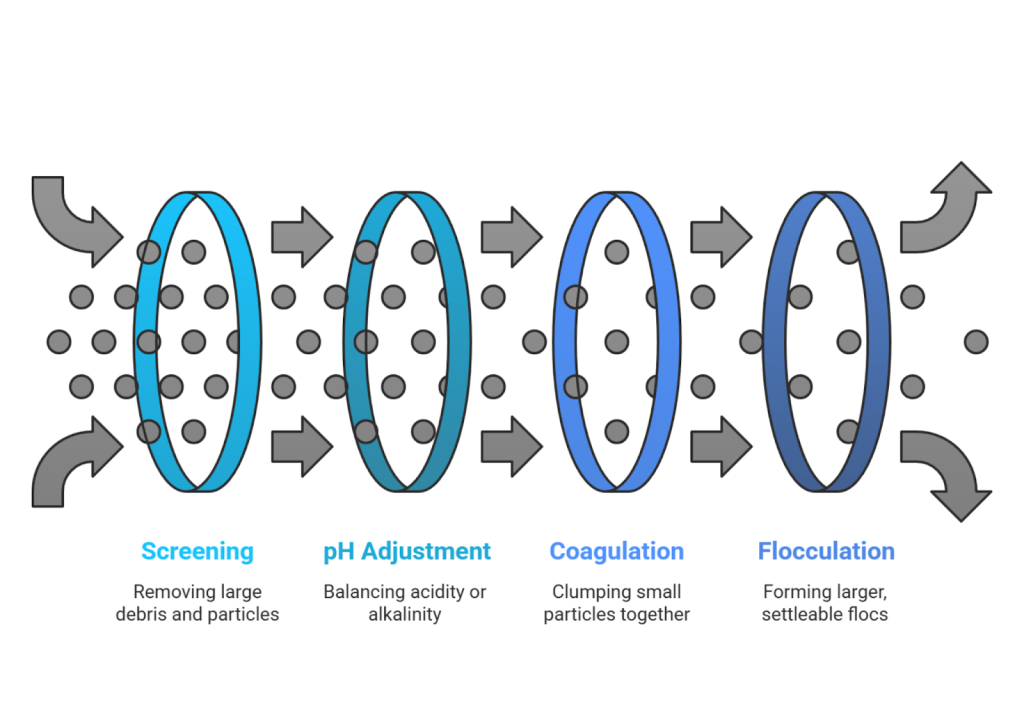
Wastewater treatment relies on a combination of physical, chemical, physio-chemical, and biological methods to remove pollutants and prepare water for reuse or discharge. Each method plays a distinct role in addressing different types of contaminants.
The process typically begins with physical methods, such as coarse and fine screening, which remove large debris and non-dissolved solids. This is followed by pH adjustment, a chemical step that stabilizes the acidity or alkalinity of the water to ensure optimal conditions for subsequent treatment stages.
Next, chemical methods like coagulation and flocculation are used to bind fine particles into larger clumps that can be removed by sedimentation or flotation. At this stage, physico-chemical technologies such as Dissolved Air Flotation (DAF) and Gas Energy Mixing (GEM) systems are applied. These combine physical separation with chemical enhancement to efficiently extract oils, grease, suspended solids, and other contaminants.
Finally, biological methods take over to break down remaining organic pollutants. These systems use microorganisms to degrade biodegradable material and are essential for reducing biochemical oxygen demand (BOD). Technologies like activated sludge systems and anaerobic digesters are commonly used in this phase, especially in industries producing organic-rich wastewater.
Together, these treatment methods form a comprehensive system that ensures regulatory compliance, protects the environment, and supports sustainable industrial operations.
Customization is critical when applying these methods. Each facility’s wastewater composition dictates the treatment approach. By combining and tailoring physical, chemical, and biological methods, industries achieve efficient and effective outcomes.
This is where we address the question, What are the four water treatments? These often include preliminary, primary, secondary, and tertiary processes, all of which we’ll explore in the next section.

What are the stages of water treatment?
To break it down further, industrial wastewater treatment follows these five critical stages:
- Preliminary Treatment
This stage protects downstream equipment by removing large objects like plastics and grit. Processes such as screening and grit removal are standard at this stage. - Primary Treatment
In this stage, various physical and chemical processes such as settling, flotation, and flocculation are used to separate solids from wastewater. Heavier particles sink, while lighter materials like oil and grease rise and are removed. The resulting solid waste is then disposed of or processed further. - Secondary Treatment
Biological processes dominate here, with beneficial bacteria consuming dissolved organic matter. Treatments like activated sludge and trickling filters are common, ensuring high effectiveness against biodegradable pollutants. - Tertiary Treatment
Aimed at achieving the highest water quality, this stage includes filtration and nutrient removal. Advanced technologies like reverse osmosis or activated carbon are often employed to remove finer pollutants or specific contaminants. - Disinfection and Discharge
The final step ensures the treated water is free of harmful pathogens before it is discharged or reused. Methods like chlorination, UV sterilization, or ozone treatment are crucial at this stage.
Each stage supports critical environmental goals and ensures compliance with legal standards. When referencing common discussions around treatment, it’s helpful to note that these stages often encompass the stages of wastewater treatment mentioned earlier.
What are the steps in an industrial wastewater treatment plant?
The treatment processes for industrial wastewater differ significantly from those used in municipal systems due to the unique pollutants and higher concentrations often associated with industrial activities. Industrial wastewater treatment targets both general contaminants and specific waste characteristics dictated by the manufacturing process.

These differences are reflected in specialized features like neutralization tanks for pH balancing, advanced contaminant removal technologies, and industry-specific solutions such as oil-water separators or chemical preliminary treatment systems. For instance, a steel processing facility may require heavy metal removal systems, while a food processing plant might rely on aerobic digestion to handle organic waste.
When addressing the question, “What are the steps in an industrial wastewater treatment plant?”, Clean Water Technology stands out as a leader in delivering tailored solutions to meet the diverse needs of various industries.
Not Sure Which Treatment Steps Your Facility Needs?
Start with our free Wastewater Survey. It takes about 5 minutes, and our engineers personally review your results to help identify the right treatment approach for your facility.
Conclusion
In conclusion, the Industrial Wastewater Treatment systems offered by Clean Water Technology provide a dependable, customized solution for your facility. Engineered to enhance operations, ensure regulatory compliance, and support environmental sustainability, our systems are tailored to meet your specific needs. Backed by years of expertise, advanced technology, and a dedication to excellence, we are ready to collaborate with you to streamline your processes and achieve your goals. Reach out to us today to discover how we can revolutionize your approach to wastewater management.
Disclaimer
The information in this article is provided for general educational purposes and to promote overall awareness. It is not intended as engineering, legal, or other professional advice, and should not be used in place of consultation with qualified professionals familiar with your specific application and conditions. This content should not be considered exhaustive.